Grok Voice 3.0: Speech-to-Speech Realtime API Architecture
// Dossier Executive Lead
Architectural analysis of xAI Grok Voice 3.0: native speech-to-speech, 0.81s TTFA, full-duplex interruptions, and real-time tool calling economics.
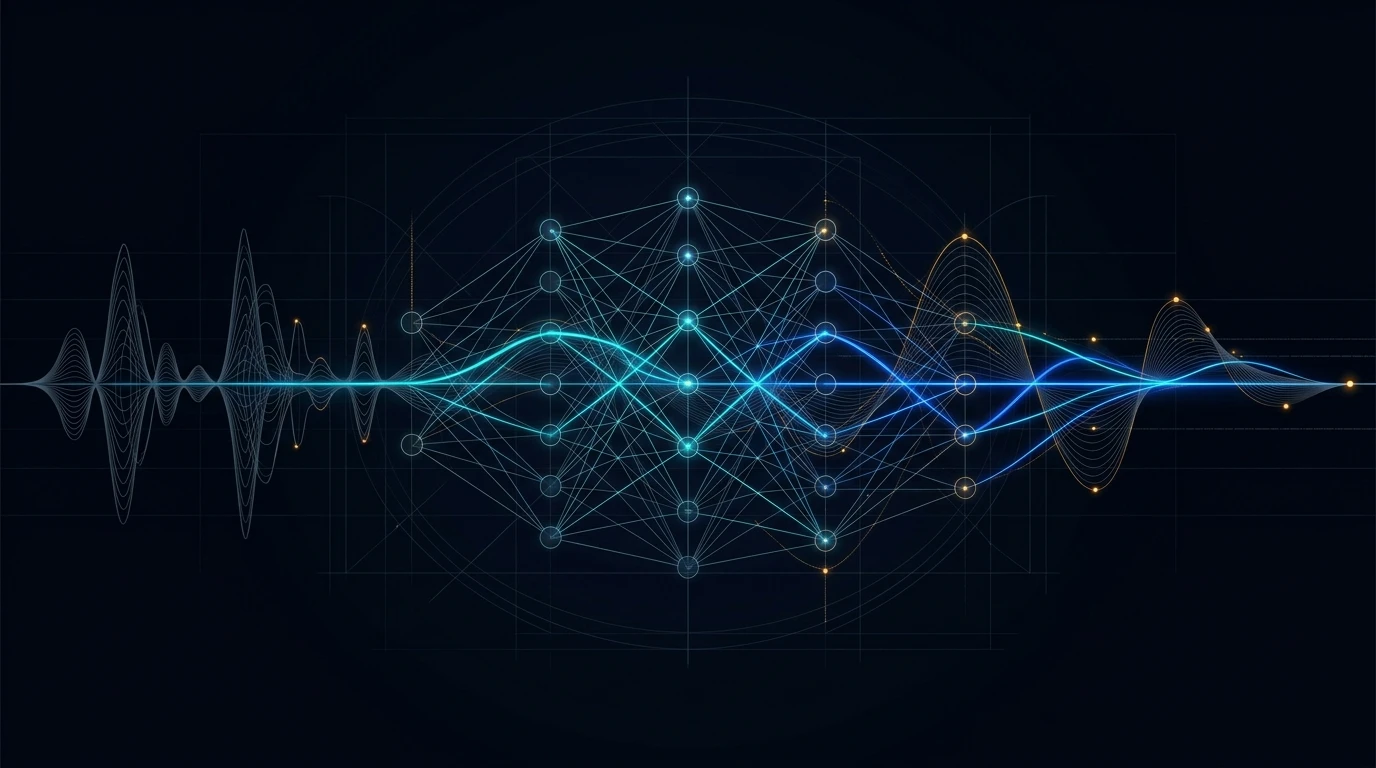
On October 14, 2026, xAI deployed Grok Voice 3.0 across its developer platform and enterprise Realtime API, marking a definitive architectural migration away from cascaded voice systems toward native, single-pass speech-to-speech processing. Traditional enterprise conversational AI pipelines assemble three decoupled subsystems—automatic speech recognition (ASR/STT), a text-based reasoning model, and text-to-speech (TTS) synthesis. While modular, this pipeline accumulates compounding latency buffers (often exceeding 1,800ms) and discards acoustic nuances such as prosody, emotional cadence, and conversational inflection. Grok Voice 3.0 collapses this pipeline into an end-to-end multimodal transformer that ingests raw audio tokens and directly emits synthesised PCM audio frames. Operating via a bidirectional WebSocket endpoint (wss://api.x.ai/v1/realtime), the model achieves an average time-to-first-audio (TTFA) latency of 0.81 seconds while natively handling full-duplex conversational interruptions, asynchronous tool calling mid-speech, and enterprise policy attribution.
Key Takeaways
- Native End-to-End Speech-to-Speech: Eliminates the latency and loss of acoustic fidelity inherent in cascaded STT-LLM-TTS pipelines by computing unified cross-attention across audio and semantic latent representations in a single forward pass.
- Sub-Second TTFA Latency: Delivers an average time-to-first-audio response of 0.81 seconds under enterprise telephony conditions, comfortably beating cascaded multi-system stacks while operating with deeper conversational reasoning than predecessor Grok Voice 2.0.
- Full-Duplex Conversational Dynamics: Scores 97.0% on Full Duplex Bench, handling mid-sentence interruptions, background speech filtering, and conversational pauses without terminating ongoing session contexts.
- Mid-Stream Function Calling & Tool Execution: Natively executes external API queries and enterprise database lookups while maintaining vocal continuity, returning structured results directly into conversational context without breaking synthetic speech flow.
- Enterprise Voice Economics: Maintained at a fixed rate of $0.08 per minute of active audio generation, providing predictable unit economics for tier-1 contact centers and high-volume interactive voice response (IVR) migrations.
Architectural Analysis: Collapsing the Cascaded Voice Pipeline
The primary bottleneck in enterprise voice automation has consistently been the architectural friction of cascaded orchestration. In conventional voice bot stacks, audio packets undergo jitter buffering and acoustic decoding before text tokens can be dispatched to an LLM. Once reasoning completes, the generated string is pushed to a TTS engine for neural synthesis. This handoff architecture introduces serialization delays, increases network edge overhead, and strips vocal inflection.
+---------------------------------------------------------------------------------------------------+
|                              LEGACY CASCADED ARCHITECTURE (1,400ms - 2,200ms)                     |
|                                                                                                   |
|  [ Inbound Audio ] -> [ ASR / STT Engine ] -> [ Text Context ] -> [ LLM Reasoning ]              |
|                             |                                             |                       |
|                             v (Serialization Delay)                       v (Token Buffering)     |
|                      [ Text Transcript ] ----------------------> [ TTS Neural Synthesis ]         |
|                                                                           |                       |
|                                                                           v                       |
|                                                                  [ Outbound Audio ]               |
+---------------------------------------------------------------------------------------------------+

+---------------------------------------------------------------------------------------------------+
|                        GROK VOICE 3.0 NATIVE SPEECH-TO-SPEECH (810ms TTFA)                        |
|                                                                                                   |
|                      +----------------------------------------------------+                       |
|                      |         Realtime API Edge (wss://api.x.ai/v1)      |                       |
|                      +-------------------------+--------------------------+                       |
|                                                |                                                  |
|                                                v Bidirectional WebSocket                          |
|  +---------------------------------------------------------------------------------------------+  |
|  |                           MEMPHIS COLOSSUS DEDICATED AUDIO ENCLAVE                          |  |
|  |                                                                                             |  |
|  |  +-------------------------+      Continuous Latent Space     +--------------------------+  |  |
|  |  | Audio Token Encoder     | -------------------------------> | Audio Token Decoder      |  |  |
|  |  | (24kHz Raw PCM / Opus)  |                                  | (Streaming 24kHz Audio)  |  |  |
|  |  +------------+------------+                                  +------------+-------------+  |  |
|  |               |                                                            ^                |  |
|  |               +-------> [ Unified Multimodal Transformer Core ] -----------+                |  |
|  |                                      |                                                      |  |
|  |                                      v Mid-Stream Dispatches                                |  |
|  |                           [ Async Tool Calling Runtime ]                                    |  |
|  +---------------------------------------------------------------------------------------------+  |
+---------------------------------------------------------------------------------------------------+
Grok Voice 3.0 maps continuous audio frames directly into discrete latent speech representations. The core model processes these acoustic latents alongside text embeddings, maintaining an unbroken internal state representation of both linguistic meaning and paralinguistic tone. Because inference runs across dedicated tensor cores in xAI’s Memphis Colossus infrastructure—previously expanded with Blackwell supercomputing fabrics as detailed in our analysis of Colossus 2 Blackwell Enterprise Compute—the system eliminates the inter-service serialization overhead entirely.
Benchmark Breakdown: Artificial Analysis Speech-to-Speech Index
Grok Voice 3.0 debuted at #1 on the Artificial Analysis Speech-to-Speech Index with an aggregate score of 86.9, outpacing competing frontier audio models across conversational fluidness and reasoning accuracy:
| Metric / Benchmark | Grok Voice 2.0 | Grok Voice 3.0 | GPT-4o Realtime Audio | Claude Voice Scaffold (Cascaded) |
|---|---|---|---|---|
| Artificial Analysis S2S Index | 78.4 | 86.9 | 82.1 | 74.8 |
| Time-to-First-Audio (TTFA) | 0.70s | 0.81s | 0.89s | 1.65s |
| Full Duplex Bench (Barge-in Fidelity) | 88.2% | 97.0% | 91.4% | 62.0% |
| Big Bench Audio (Speech Reasoning) | 84.1% | 98.5% | 89.2% | 85.6% |
| τ-Voice (Customer Support Task Resolution) | 58.3% | 71.6% | 64.9% | 52.1% |
| Audio Pricing (per active minute) | $0.08 | $0.08 | $0.24 | $0.15–$0.30 (variable) |
| Native Tool Execution During Speech | No (Turn-locked) | Yes (Full-Duplex) | Partial | Multi-hop only |
While Grok Voice 3.0’s TTFA of 0.81 seconds reflects a minor 110ms increase over the lightweight acoustic decoder in Grok Voice 2.0 (documented in our earlier examination of Grok Voice Transcribe 2.0 Telephony Benchmarks), this trade-off is deliberate: the added compute budget powers a 14.4-percentage-point gain in speech reasoning on Big Bench Audio and unlocks native full-duplex tool calling.
Real-Time Tool Calling & Asynchronous Agent Handshakes
A critical limitation in prior real-time audio systems was conversational lock-out: when a model triggered an external tool or database query, audio output was halted or forced into awkward synthetic filler pauses.
Grok Voice 3.0 introduces decoupled execution for agentic function calls. When an end-user requests an operational change (such as verifying a transaction in an enterprise ledger or modifying an airline reservation), the audio transformer issues a non-blocking tool execution payload over the WebSocket control channel while maintaining vocal prosody.
// Realtime API WebSocket Server Event: tool_call_started
{
  "type": "conversation.item.created",
  "item": {
    "id": "item_voice_908321",
    "type": "function_call",
    "name": "lookup_customer_account",
    "arguments": "{\"account_id\": \"ACC-99214\", \"auth_token_hash\": \"e4b10...\"}",
    "call_id": "call_v3_8819",
    "status": "in_progress",
    "audio_stream_active": true
  }
}
The model can verbally confirm intent (“Looking that account up for you right now, Mr. Sterling…”) while the tool payload executes asynchronously in the customer’s backend environment. Once the client sends conversation.item.create with the function output, Grok Voice 3.0 ingests the structured telemetry without resetting the acoustic decoder or restarting speech generation.
Enterprise Governance, Telemetry & Security Guardrails
Deploying voice models in customer-facing telephony or healthcare settings requires strict auditability and user-level compliance isolation. Alongside the Grok Voice 3.0 release, xAI expanded its enterprise security primitives:
1. safety_identifier Attribution
Under previous xAI API revisions, policy triggers or abuse evaluations were aggregated at the master organization API key level. Grok Voice 3.0 mandates support for the safety_identifier parameter:
{
  "model": "grok-voice-3.0",
  "modalities": ["audio", "text"],
  "voice": "sal",
  "safety_identifier": "usr_tenant_enterprise_77190",
  "input_audio_format": "pcm16",
  "output_audio_format": "pcm16"
}
This isolates downstream customer telemetry, ensuring that an adversarial jailbreak or compliance breach by an individual caller does not degrade the rate limits or security posture of the enterprise’s broader contact center deployment.
2. Zero Data Retention (ZDR) & Telephony Ingestion
For regulated environments adhering to SOC 2 Type II, HIPAA, or PCI-DSS Level 1, Grok Voice 3.0 sessions can be initialized with cryptographically enforced Zero Data Retention. Under this configuration, in-memory audio buffers and latent spectrogram tensors are flushed immediately upon WebSocket termination. Telephony integrators using SIP trunks or WebRTC gateways can route PCM audio streams via direct Starlink or AWS Direct Connect circuits to xAI’s Memphis ingress without intermediate cloud transit.
3. Model Migration & Aliasing Cadence
With the launch of Grok Voice 3.0, xAI officially deprecated grok-voice-2.0. The production alias grok-voice-latest has been migrated to grok-voice-3.0. Enterprise engineering teams with deterministic regression baselines are advised to lock their deployment manifests to the immutable identifier grok-voice-3.0 rather than the rolling alias to avoid unexpected voice persona drift during quarterly patch cycles.
Strategic Verdict for Enterprise Architects
xAI’s deployment of Grok Voice 3.0 solidifies the transition from conversational voice bots to true real-time voice agents. By achieving a 0.81s TTFA, full-duplex interruption recovery (97.0%), and native mid-speech function calling at an aggressive $0.08 per minute, Grok Voice 3.0 establishes an attractive price-to-performance benchmark for enterprise contact centers and field robotics.
For technical leadership evaluating customer interaction automation, Grok Voice 3.0 warrants immediate staging in pilot environments where conversational friction and tool latency have historically undermined consumer adoption.
For a broader evaluation of xAI’s infrastructure roadmaps, hardware investments, and governance postures, review our comprehensive SpaceXAI Grok Enterprise Review.
Related xAI Lab Dossiers
// XAI-DOSSIER
Colossus 2 & Grok 4.7: xAI's Blackwell Enterprise Supercomputing
Architectural breakdown of xAI's Colossus 2 bring-up, Google's 110k Blackwell GPU lease, and Grok 4.7 reasoning API economics for enterprise workloads.
Grok Voice Transcribe 2.0: Telephony Architecture & Benchmarks
Architectural analysis of xAI Grok Voice Transcribe 2.0: 2x telephony accuracy, 8-channel diarization, and $0.10/hr enterprise speech economics.