Grounding the Enterprise: The Rise of Microsoft IQ


Enterprise AI agents are facing a silent production crisis: they are technically capable of executing actions, but they lack the contextual grounding needed to make correct decisions. Without real-time access to organizational files, email threads, live web data, and business definitions, even the most advanced models operate in a vacuum.
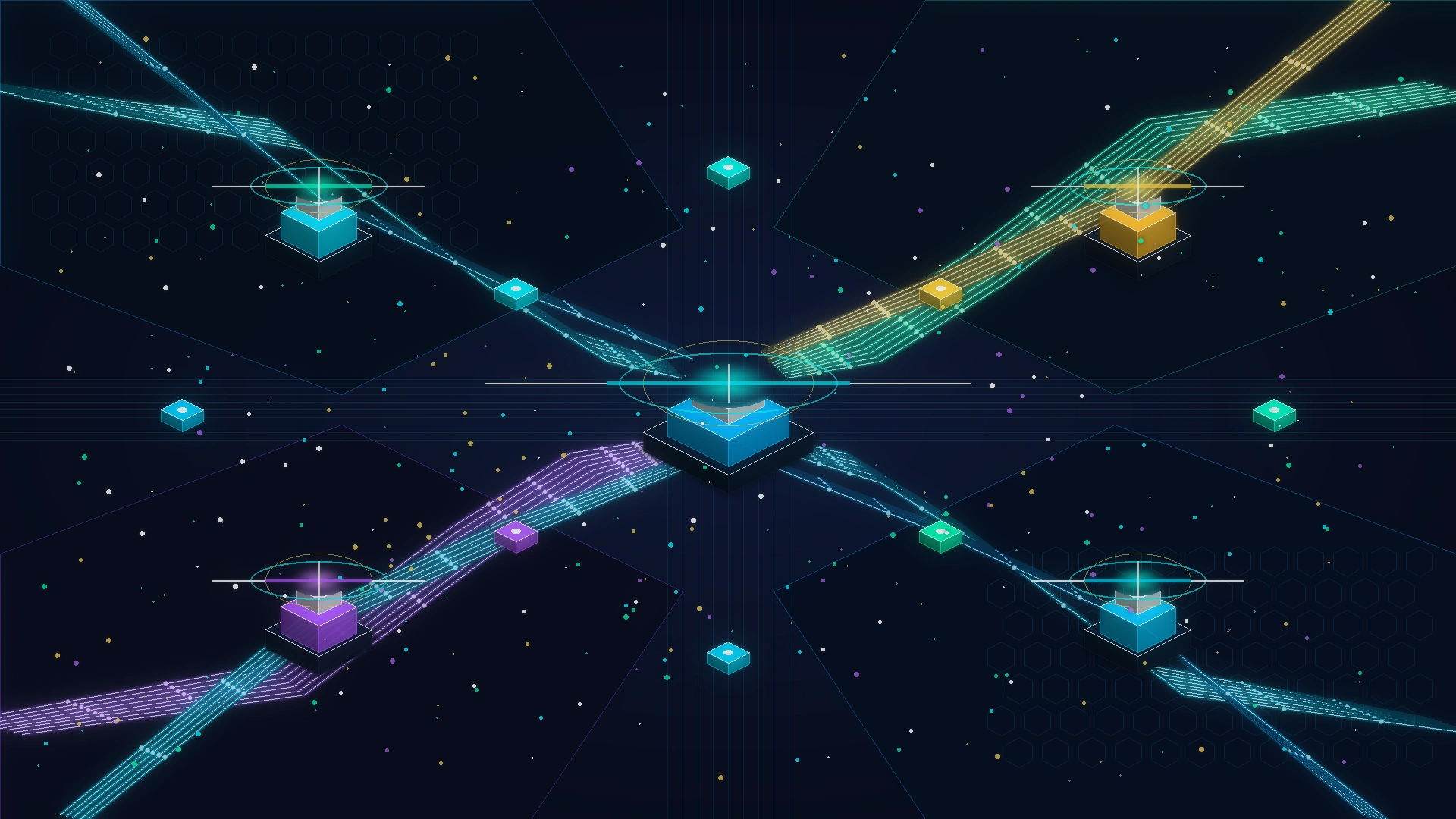
To bridge this execution gap, Microsoft unveiled Microsoft IQ at Build 2026, introducing a unified enterprise intelligence layer designed to serve as a shared, continuously evolving brain for autonomous agents.
Key Takeaways
- Unified Semantic Layer: Microsoft IQ acts as a centralized brain, connecting AI agents to both deep enterprise repositories and real-time external web data.
- The Work & Web IQ Stack: Work IQ maps collaboration patterns across Microsoft 365, while Web IQ offers an MCP-native, model-agnostic engine for high-speed web retrieval.
- Structured Knowledge Graph: By utilizing Fabric IQ and Foundry IQ, enterprise teams can ensure that agents reason consistently against certified business metrics and compliance policies.
The Grounding Crisis in Enterprise AI
For the past year, organizations have rushed to deploy autonomous agents, only to discover that legacy Retrieval-Augmented Generation (RAG) pipelines are insufficient for multi-step workflows. Traditional RAG setups typically pull static chunks from a single database, leaving agents blind to shifting project timelines, cross-department slack, or changing market conditions.
This limitation has slowed the rollout of the agentic control plane across complex corporate structures. If an agent cannot trust the currency and completeness of its inputs, it cannot safely execute transactions. Microsoft IQ addresses this by establishing a dynamic context layer that sits between LLMs and raw enterprise systems, feeding agents optimized semantic graphs rather than raw text search results.
Work IQ: Contextualizing Workspace Collaboration
At the heart of internal grounding is Work IQ, Microsoft’s workplace intelligence layer. Work IQ captures and structures a semantic understanding of how work actually occurs across an organization. By analyzing Microsoft 365 activities, emails, documents, meetings, and collaboration patterns, Work IQ maps the relationships between people, projects, and documents.
As announced on the Microsoft Tech Community, the general availability of the Work IQ APIs on June 16, 2026, allows developers to feed this organizational context directly into custom agent frameworks. An agent tasked with “updating the Q3 budget draft” no longer has to guess which document is the latest; Work IQ feeds the agent the exact file, the recent comments from the lead architect, and relevant insights from the team’s email history.
Web IQ: Model-Agnostic, High-Speed Web Grounding
While Work IQ manages internal corporate context, enterprise agents also require access to live external data to monitor competitors, track regulatory shifts, or search for news. Traditionally, this meant wrapping search APIs, which introduces latency and token bloat.
To solve this, Microsoft launched Web IQ, an AI-first web search stack that operates natively with the Model Context Protocol (MCP). According to the official Microsoft News portal, Web IQ is model-agnostic and designed to retrieve and extract relevant web passages significantly faster than traditional search engines. By serving as an MCP-native resource, Web IQ integrates seamlessly into custom agent runtime environments, working hand-in-hand with custom reasoning models like those explored in Redmond’s native MAI models.
Fabric IQ and Foundry IQ: The Corporate Brain
To guarantee that agents make decisions aligned with official company standards, Microsoft IQ incorporates two structured data layers:
- Fabric IQ: Models business operations by referencing shared metrics, definitions, and relationships found in enterprise analytics platforms like Microsoft Fabric. This ensures that when two different agents calculate “revenue churn,” they use the exact same formula.
- Foundry IQ: Serves as the compliance and governance layer, preserving trusted knowledge while filtering out unverified or policy-violating information.
This structured grounding layer works in tandem with OS-level architectures, such as Windows MXC, providing the memory and context needed for local agent runtimes to execute complex business workflows safely and efficiently.
Final Thoughts: The Road to Grounded Autonomy
The launch of Microsoft IQ represents a major transition in the AI industry. We are moving away from general-purpose foundation models that rely on static training data and toward highly grounded, contextualized agent networks. For enterprise IT leaders, the priority is clear: the value of your AI agents will not be determined by the raw size of their LLMs, but by the richness and security of the semantic layers they are grounded in.