The Agentic Control Plane: Orchestrating the Multi-Agent Enterprise


Your engineering teams and business units are no longer just prompting chatbots to draft documentation or write boilerplate scripts; they are deploying autonomous software agents that can plan multi-step workflows, inspect production systems, call external tools, and even delegate tasks to subordinate models. Welcome to the enterprise orchestration crisis.
Key Takeaways
- From Single Prompts to Agent Control Planes: Enterprise AI has graduated from isolated chat interfaces to autonomous, decision-making software agents operating across microservices and internal databases.
- The “Shadow Agent” Security Crisis: Without centralized telemetry, authentication, and execution boundaries, distributed AI agents trigger unauthorized API calls, infinite recursion loops, and data exfiltration risks.
- The Control Plane Solution: An Agent Control Plane provides deterministic identity, long-lived state management, tool registries via the Model Context Protocol (MCP), and human-on-the-loop governance.
- Measurable Business Impact: Leading organizations deploying centralized orchestration frameworks reduce rogue compute expenditures by over 70% while accelerating cross-functional process velocity.
What is an Agent Control Plane?
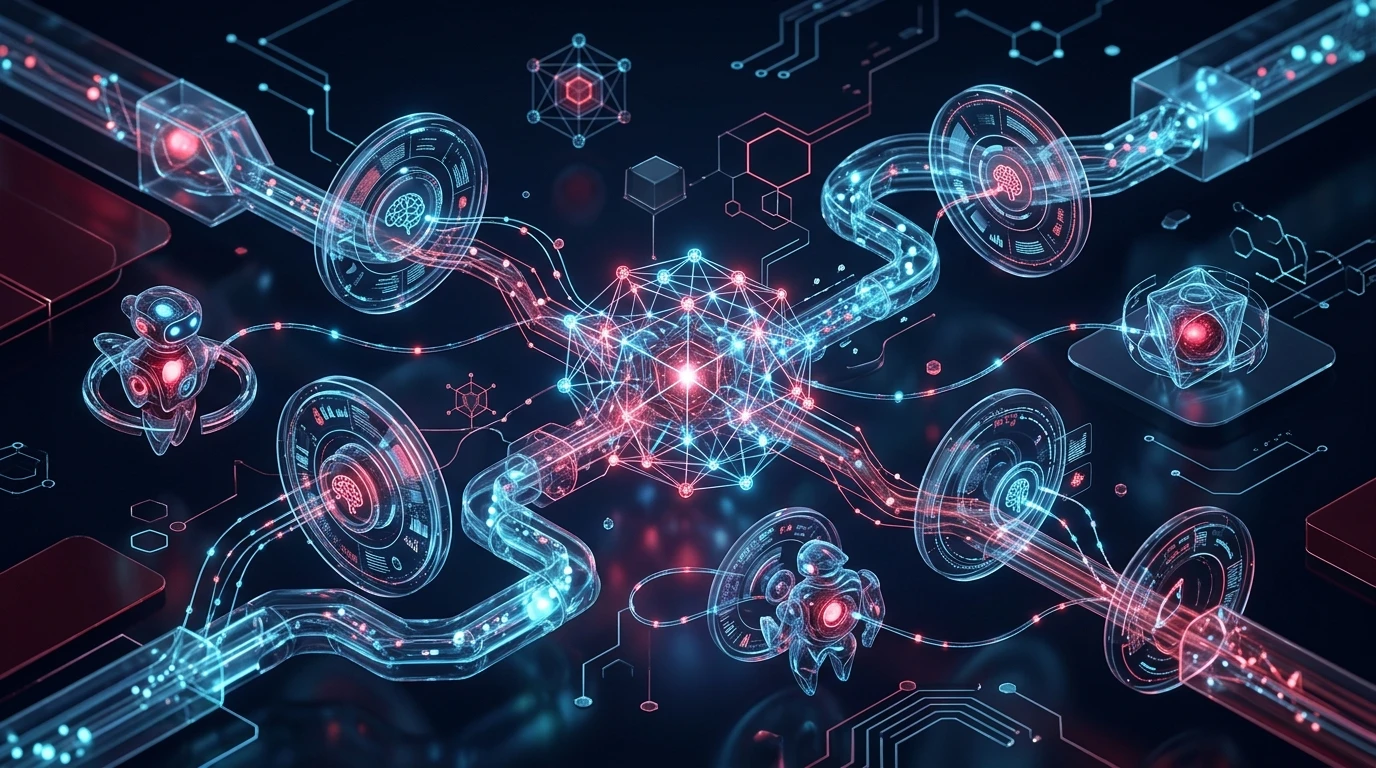
An Agent Control Plane is a centralized infrastructure and governance layer designed to register, authenticate, monitor, and coordinate autonomous AI agents across enterprise environments. Just as Kubernetes emerged in the cloud-native era to orchestrate distributed Docker containers, the agent control plane has emerged to orchestrate distributed digital workers.
In 2023, chief information security officers worried about what employees were pasting into ChatGPT. In 2026, technical leadership focuses on what autonomous agents are executing against internal production APIs while teams are asleep. According to enterprise research by Gartner on AI Infrastructure and Governance, over 80% of enterprises will deploy autonomous agentic workflows by 2026, yet fewer than 25% have established centralized access management or session boundaries for these non-human actors.
Without a dedicated agent control plane, organizations inevitably face “Shadow AI 2.0”: unmonitored scripts pinging proprietary vector databases, conflicting cron tasks overwriting CRM records, and runaway LLM reasoning loops racking up thousands of dollars in token fees.
Architectural Pillars of an Agentic AI Control Plane
A production-grade agentic ai control plane must bridge the gap between stochastic language model reasoning and deterministic enterprise compliance. It consists of five foundational subsystems:
+-----------------------------------------------------------------------------+
|                      Enterprise Agentic Control Plane                       |
+-----------------------------------------------------------------------------+
|  1. Identity & RBAC (Cryptographic Spiffe/SPIRE IDs, Ephemeral Scopes)      |
+-----------------------------------------------------------------------------+
|  2. Universal Tool Gateway (Model Context Protocol / MCP Servers)           |
+-----------------------------------------------------------------------------+
|  3. Distributed State Engine (Event Sourcing, Checkpointing, Time-Travel)   |
+-----------------------------------------------------------------------------+
|  4. Policy Guardrails & Cost Circuit Breakers (Budget Caps, Rate Enforcers)  |
+-----------------------------------------------------------------------------+
|  5. Human-on-the-Loop Audit Vault (Immutable Log, Step Replay, Override)    |
+-----------------------------------------------------------------------------+
1. Agent Identity & Cryptographic Authentication
Every agent deployed across the organization must be assigned a unique, immutable service principal with scoped permissions, continuously verified through automated ai-powered access reviews and least-privilege directory governance. A customer-support agent querying order status should possess zero authorization to query HR payroll tables or execute raw SQL writes.
2. Standardized Tool Registry via Model Context Protocol (MCP)
Agents require access to tools, databases, and APIs. Rather than writing custom integration code for every model, enterprises standardize tool exposure through the Linux Foundation Model Context Protocol & Open Agent Frameworks. As we detailed in our guide to Cloudflare MCP Servers, centralizing tool discovery ensures credentials and rate limits remain strictly isolated from model prompt memory.
3. Distributed State Management & Session Checkpointing
Long-horizon business workflows—such as loan underwriting or security incident triage—take hours or days to complete. The control plane maintains a durable state store, enabling agents to pause execution for human verification and resume with full context history without re-burning input tokens.
4. Policy Guardrails & Execution Circuit Breakers
To prevent catastrophic financial or operational damage, the control plane enforces hard spending limits, maximum step depths, and semantic regex filters. If an agent begins looping over a failing test or generating toxic outputs, the circuit breaker terminates the session immediately.
5. Human-on-the-Loop Telemetry & Auditability
Regulatory frameworks like the EU AI Act require explainable audit trails. The control plane records every LLM prompt, internal scratchpad thought, tool payload, and database mutation in a tamper-resistant event log.
Comparing Agent Control Planes vs. Traditional API Gateways and Service Meshes
A frequent question among systems architects is: “Why can’t we just use our existing Kong API Gateway or Istio Service Mesh to manage AI agents?”
While traditional gateways excel at routing deterministic HTTP requests between microservices, autonomous agents present non-deterministic, multi-turn reasoning patterns that standard network proxies cannot govern:
| Architectural Dimension | Traditional API Gateway (e.g., Kong, Envoy) | Kubernetes Service Mesh (e.g., Istio) | Enterprise Agent Control Plane |
|---|---|---|---|
| Primary Managed Entity | HTTP/gRPC Request Endpoints | Container Network Interfaces (Pods) | Autonomous Agentic Personas & Goals |
| Execution Determinism | 100% Deterministic Request-Response | Network Packet Routing & Mutual TLS | Stochastic Multi-Step Planning & Tooling |
| State & Context Horizon | Stateless or Short-Lived JWT Tokens | Ephemeral Pod IP Allocation | Long-Lived Vector Memory & Checkpoints |
| Tool Calling Governance | Static OpenAPI Specifications | Service-to-Service Ingress/Egress | Dynamic MCP Tool Schema Discovery & Scoping |
| Circuit Breaking Metric | HTTP 5xx Error Rates & Latency | Connection Drop Spikes | Token Burn Velocity & Semantic Deviation |
| Human Interaction | None (Machine-to-Machine) | None (Platform Ops Only) | Asynchronous Human-in-the-Loop Approvals |
Deploying Autonomous AI Agents for Enterprise Production
Organizations seeking to deploy scalable ai agents for enterprise workflows must transition from exploratory proofs-of-concept to engineered operational frameworks. As highlighted in research by McKinsey on the Economic Potential of Generative AI, value realization hinges on integrating AI deeply into core business processes rather than treating models as standalone novelty chatbots.
When integrating frontier coding agents like Cursor IDE, Claude Code, and Devin Desktop / Windsurf into enterprise environments, or governing continuous hybrid reasoning agents, an effective control plane ensures that code generation, test execution, and deployment pipelines remain secure and audit-ready.
At HarrisonAIX, our forward deployed engineering teams assist technical organizations in designing and operationalizing custom agent architectures. Whether governing long-horizon scientific discovery agents like Arbor autonomous scientific research or securing dedicated LLM instances via Cohere private enterprise deployments, a centralized control plane provides immutable telemetry and boundary enforcement. Through our Forward Deployed Engineering Services, we embed directly with enterprise platform teams to implement private control planes, air-gapped VPC integrations, and automated compliance gates.
Frequently Asked Questions: Enterprise Agentic Control Planes
What is the difference between an AI orchestrator and an Agent Control Plane?
An AI orchestrator (like LangChain, LlamaIndex, or CrewAI) is a software library that dictates how an individual agent structures its prompt and tool loops. An Agent Control Plane is the platform infrastructure layer that governs, secures, monitors, and audits hundreds of heterogeneous agents running concurrently across an entire enterprise.
How does an Agent Control Plane enforce data loss prevention (DLP)?
The control plane inspects all incoming prompts and outgoing tool parameters before they reach the model or database. It automatically redacts personally identifiable information (PII), enforces .aiignore restrictions, and prevents models from exposing proprietary secrets.
Can an Agent Control Plane prevent infinite token loops and unexpected billing spikes?
Yes. Modern control planes implement real-time cost circuit breakers. Platform administrators set daily dollar budgets and maximum execution step limits per agent. If an agent exceeds these parameters, its execution token is revoked instantly.
Why is an agent control plane for orchestrating autonomous ai agents essential in 2026?
Every enterprise deploying multi-agent systems must implement a centralized agent control plane for orchestrating autonomous ai agents. Without this infrastructure, distributed agents operate as unmonitored shadow actors—triggering unbudgeted API loops, conflicting database writes, and security boundaries violations. A centralized control plane enforces cryptographic identity (SPIFFE/SPIRE), dynamic Model Context Protocol (MCP) tool authorization, and real-time cost circuit breakers.
What features matter most in an enterprise agent control plane buying checklist?
Key architectural requirements include:
- Cryptographic Agent Identity: SPIFFE/SPIRE-backed service principals with ephemeral scopes.
- Model Context Protocol (MCP) Tool Gateways: Centralized tool routing with parameter sanitization and token budget throttling.
- Durable State & Checkpointing: Event-sourced execution history for time-travel debugging and pause-and-resume workflows.
- Hard Spending & Recursion Circuit Breakers: Automatic session termination when step counts or dollar budgets exceed pre-set thresholds.
- Human-on-the-Loop Interventions: Approval workflows before external API mutations, database writes, or deployment actions.
Final Thoughts: Building the Enterprise Nervous System
The era of isolated, individual AI chat windows is drawing to a close. The future of enterprise productivity belongs to swarms of specialized, cooperating agents executing complex cross-departmental operations.
For technical leaders, the directive is unequivocal: Stop building ad-hoc conversational interfaces and start constructing the agent control plane that governs your enterprise nervous system. Those who master orchestration today will dictate market velocity for the next decade.