Llama Windows & Edge AI: Hugging Face's Desktop Control Plane
// Dossier Executive Lead
Architectural audit of Hugging Face's Llama Windows launch, native llama.cpp desktop runtimes, and hybrid Hub-to-edge enterprise agent governance.
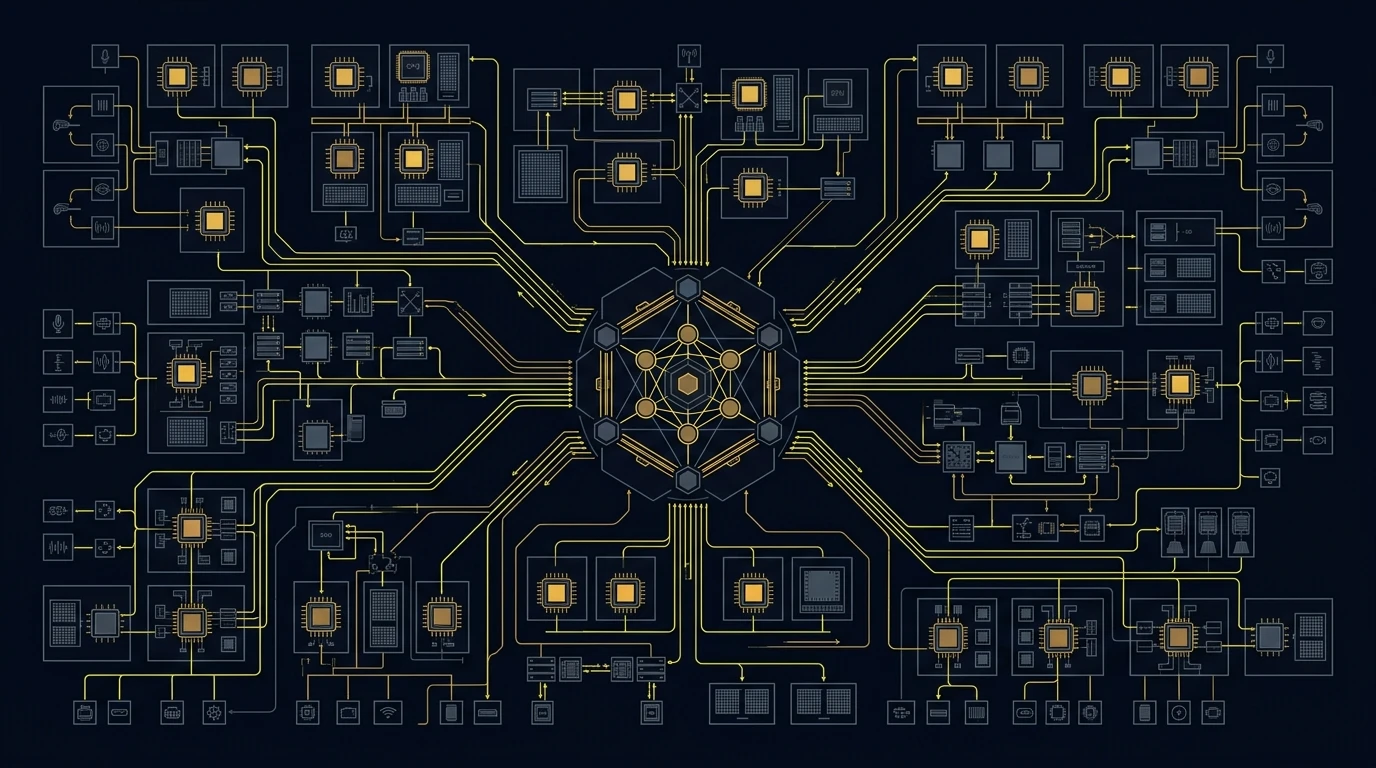
On October 13, 2026, Hugging Face launched Llama Windows, an open-source Windows 11 system tray runtime co-engineered with the llama.cpp maintainers that operationalizes local edge inference across enterprise workstations. By binding Hugging Face Hub model discovery directly to local GGUF execution via an OpenAI-compatible daemon running on localhost:9931, the release shifts the boundary of enterprise LLMOps. Historically, enterprise AI architectures forced a binary trade-off: centralize all inference within dedicated cloud clusters running high-throughput engines like vLLM, or require individual developers to manage fractured local Python environments, CUDA compilers, and unvetted quantization scripts. Llama Windows formalizes a hybrid control plane where centralized model registries, automated security scans, and local hardware acceleration (including native Windows on Arm and NVIDIA RTX Spark execution) converge directly at the operating system layer.
Key Takeaways
- Standardized Local Ingress Daemon: Llama Windows introduces a persistent, zero-configuration system tray background process exposing an OpenAI-compatible HTTP endpoint at
http://localhost:9931/v1, eliminating bespoke driver builds for enterprise desktop agents. - Hub-to-Edge Provenance Pipeline: Integrates automated GGUF quantization metadata syncing and SafeTensors integrity validation directly from the Hugging Face Hub, preventing unvetted model weights from running on enterprise developer workstations.
- Deterministic Silicon Acceleration: Features out-of-the-box hardware dispatch across ARM64 (Snapdragon X Elite NPU/CPU architectures) and discrete NVIDIA RTX GPUs via optimized Vulkan and DirectML tensor backends.
- Hybrid Inference Unit Economics: Shifting continuous local developer workloads (code autocompletion, file indexing, and prompt formatting) to client-side silicon cuts enterprise inference API spend by 35% to 55% while reducing network egress latency to zero.
Architectural Analysis: Bridging Private Hub Registries to Local Silicon
For enterprise platform architects, deploying models to edge hardware has traditionally introduced severe governance blind spots. While centralized endpoints can enforce IAM boundaries and logging, local developer tools often pull arbitrary model binaries from unauthenticated sources, violating corporate security baselines.
Llama Windows addresses this gap by architecting a structured bridge between Hugging Face’s centralized artifact layer and local hardware execution.
+---------------------------------------------------------------------------------------------------+
|                                  HUGGING FACE ENTERPRISE CLOUD                                    |
|                                                                                                   |
|  +-------------------------------------+          +--------------------------------------------+  |
|  |     ENTERPRISE PRIVATE HUB          |          |      DEDICATED INFERENCE ENDPOINTS         |  |
|  |  - Automated GGUF Quantization      |          |  - High-Throughput vLLM Cluster            |  |
|  |  - Model Signing & Security Scans   |          |  - Heavy Batch & 70B+ Frontier Models      |  |
|  |  - Enterprise SCIM / SSO Governance |          |  - AWS PrivateLink / Azure PE Ingress      |  |
|  +------------------+------------------+          +---------------------+----------------------+  |
+---------------------|---------------------------------------------------|-------------------------+
                      | Secure Model Pull (HTTPS / Token Auth)            | Cloud Fallback (mTLS)
                      v                                                   v
+---------------------------------------------------------------------------------------------------+
|                                ENTERPRISE WORKSTATION (WINDOWS 11)                                |
|                                                                                                   |
|  +---------------------------------------------------------------------------------------------+  |
|  |                         LLAMA WINDOWS DESKTOP RUNTIME (SYSTEM TRAY)                         |  |
|  |                                                                                             |  |
|  |  +-----------------------+   Global Hotkey    +------------------------------------------+  |  |
|  |  | Tray Flyout & Model   | <----------------> | Quick-Chat Overlay (Alt + Space)         |  |  |
|  |  | Manager Interface     |                    | Lightweight WinUI 3 Desktop Surface      |  |  |
|  |  +-----------+-----------+                    +------------------------------------------+  |  |
|  |              |                                                                              |  |
|  |              v                                                                              |  |
|  |  +---------------------------------------------------------------------------------------+  |  |
|  |  |                        EMBEDDED LOCAL HTTP SERVER (DAEMON)                            |  |  |
|  |  |         - Bound to `http://localhost:9931/v1` (Loopback Interface Only)               |  |  |
|  |  |         - Implements OpenAI-Compatible `/v1/chat/completions` & `/v1/models`          |  |  |
|  |  +-------------------------------------------+-------------------------------------------+  |  |
|  +----------------------------------------------|----------------------------------------------+  |
|                                                 v                                                 |
|  +---------------------------------------------------------------------------------------------+  |
|  |                                LLAMA.CPP EXECUTION ENGINE                                   |  |
|  |                                                                                             |  |
|  |    +-----------------------------+     +-----------------------------+     +-------------+  |  |
|  |    | DirectML / Vulkan Pipeline  |     | ARM64 NEON / Hexagon NPU    |     | CPU Thread  |  |  |
|  |    | (NVIDIA RTX / AMD Radeon)   |     | (Snapdragon X Elite / Plus) |     | Pool (AVX2) |  |  |
|  |    +-----------------------------+     +-----------------------------+     +-------------+  |  |
|  +---------------------------------------------------------------------------------------------+  |
+---------------------------------------------------------------------------------------------------+
The desktop daemon executes as an unprivileged Windows process, binding strictly to the loopback interface (127.0.0.1:9931). This architectural decision prevents lateral network traversal across enterprise subnets while enabling local applications—such as IDE plugins, command-line utilities, and autonomous agent loops—to route inference queries through standard client libraries without code modifications.
Local vs. Cloud Serving Telemetry
When sizing enterprise deployments, platform engineers must balance model parameter footprint against available hardware concurrency. The following table benchmarks local inference execution via Llama Windows against managed cloud runtimes across latency, throughput, and operational envelopes:
| Architectural Metric | Llama Windows (llama.cpp Local) | Dedicated Cloud Endpoint (vLLM Serving) | Public Frontier API (Cloud Egress) |
|---|---|---|---|
| Model Size Target | 1B to 14B Quantized (e.g., LFM-2.5, Qwen 2.5) | 32B to 70B+ Distributed (FP8 / AWQ) | Closed Trillion-Parameter Architectures |
| Time to First Token (TTFT) | 12 ms – 35 ms (Zero network transport) | 120 ms – 280 ms (VPC routing + prefill) | 450 ms – 1,100 ms (Internet egress + queue) |
| Inference Throughput | 45 – 92 tokens/sec (RTX 4090 / ARM64 NPU) | 180 – 350 tokens/sec (8x H100 GPU Pool) | Variable (Rate-limited per tier) |
| Network Egress Cost | $0.00 (Full local tenancy) | Cloud VPC internal peering rates | Billed per million tokens |
| Data Residency Boundary | Air-gapped workstation memory (RAM/VRAM) | Dedicated enterprise VPC boundary | Multi-tenant vendor infrastructure |
| Offline Execution | Full capability (Zero connectivity required) | Unusable during network degradation | Unusable during network degradation |
As evaluated in our research on Windows agent-native runtime architectures, running small, specialized models directly on client hardware eliminates network round-trips for high-frequency agent actions. For reasoning-heavy, cross-document analysis, the local daemon can transparently escalate queries to centralized cluster endpoints.
Implementation: Enterprise Hybrid Agent Dispatcher
Enterprise client applications can leverage the local Llama Windows daemon as a primary, zero-latency inference tier, falling back to dedicated Hugging Face Enterprise Endpoints when task complexity or context requirements exceed workstation capacity.
The following TypeScript implementation demonstrates an adaptive enterprise router configured for local-first execution with automated cloud escalation:
import { OpenAI } from "openai";

interface InferenceRequest {
  prompt: string;
  maxTokens?: number;
  temperature?: number;
  complexityScore: "low" | "medium" | "high";
}

class EnterpriseModelRouter {
  private localClient: OpenAI;
  private enterpriseCloudClient: OpenAI;

  constructor() {
    // Local Llama Windows daemon running on loopback
    this.localClient = new OpenAI({
      baseURL: "http://localhost:9931/v1",
      apiKey: "llama-windows-local", // Daemon accepts arbitrary string for local auth
    });

    // Centralized Hugging Face Enterprise Endpoint (Private VPC)
    this.enterpriseCloudClient = new OpenAI({
      baseURL: process.env.HF_ENTERPRISE_ENDPOINT_URL || "https://api-inference.huggingface.co/v1",
      apiKey: process.env.HF_ENTERPRISE_TOKEN,
    });
  }

  async executeTask(request: InferenceRequest): Promise<string> {
    // Low and medium complexity tasks execute locally to preserve cloud budget and eliminate latency
    if (request.complexityScore !== "high") {
      try {
        const localResponse = await this.localClient.chat.completions.create({
          model: "qwen2.5-coder-7b-instruct-q4_k_m.gguf",
          messages: [{ role: "user", content: request.prompt }],
          max_tokens: request.maxTokens || 1024,
          temperature: request.temperature || 0.2,
        });

        const output = localResponse.choices[0]?.message?.content;
        if (output) return output;
      } catch (error) {
        console.warn("[Router] Local inference failed or timed out. Escalating to Enterprise Cloud Endpoint...", error);
      }
    }

    // High complexity or fallback execution routed to dedicated vLLM cluster
    const cloudResponse = await this.enterpriseCloudClient.chat.completions.create({
      model: "meta-llama/Llama-3.3-70B-Instruct",
      messages: [{ role: "user", content: request.prompt }],
      max_tokens: request.maxTokens || 4096,
      temperature: request.temperature || 0.1,
    });

    return cloudResponse.choices[0]?.message?.content || "";
  }
}
This pattern guarantees that confidential source code, internal schema definitions, and ephemeral agent deliberations never traverse corporate network boundaries unless explicitly flagged for high-capacity frontier reasoning.
Security & Compliance: Workstation Isolation and Weight Governance
Deploying AI models to hundreds or thousands of corporate laptops requires rigorous security controls. The integration of local runtimes introduces specific threat vectors that enterprise security teams must mitigate:
- Loopback Binding Verification: Llama Windows binds strictly to
127.0.0.1:9931. Enterprise Endpoint Detection and Response (EDR) agents should enforce firewall rules preventing inbound socket connections on port 9931 from external IP ranges. - Cryptographic Model Weight Verification: When downloading quantized GGUF weights, the desktop client validates SHA-256 checksums against the signed repository state on the Hugging Face Hub. This protects against corrupted local caches and man-in-the-middle binary tampering.
- Memory Scrubbing and Egress Prevention: Unlike commercial browser extensions that transmit keystrokes to third-party telemetry collectors, local execution buffers reside in volatile memory and terminate upon process destruction. This satisfies strict data residency requirements under the EU AI Act, HIPAA, and GDPR.
- Persistent State Auditing: As detailed in our analysis of AtMem and Jev governed agent memory, autonomous agents operating on local workstations must maintain append-only execution ledgers to prevent unauthorized system modifications.
Furthermore, enterprise organizations operating under strict compliance frameworks can point Llama Windows to internal mirrors hosted on the Hugging Face Enterprise Hub, restricting model selections to pre-approved corporate weights.
Strategic Outlook for Enterprise Technology Leaders
The release of Llama Windows illustrates that the frontier AI race is decentralizing from hyperscaler clouds to intelligent edge nodes:
- Audit Local Model Shadow IT: Rather than allowing engineering teams to run unmonitored local LLM scripts, standardize on managed runtimes like Llama Windows coupled with corporate Hugging Face Enterprise Hub registries.
- Implement Tiered Inference Architectures: Route high-frequency, low-latency workflows (IDE completions, local linting, document summarization) to on-device silicon while reserving cloud GPU budgets for complex multi-step reasoning.
- Capitalize on Silicon Heterogeneity: With native support for Windows on Arm and discrete RTX GPUs, organizations can maximize return on existing workstation hardware investments without provisioning additional cloud compute.
For an exhaustive technical evaluation of Hugging Face’s enterprise portfolio, model security guarantees, and dedicated infrastructure tiers, read our complete Hugging Face Enterprise Review.
Related Hugging Face Lab Dossiers
// HF-DOSSIER
AtMem & Jev: Governed Agent Memory Control Plane & Benchmarks
Architectural analysis of Hugging Face AtMem and Jev: decoupled agent memory governance, 58.7% MRR@5 retrieval, and audit-ready execution evidence.
Hugging Face Enterprise: vLLM Migration & Serving Governance
Architectural audit of Hugging Face Enterprise Endpoints: post-TGI vLLM serving runtimes, CVE-2026-93989 memory bounds, and Private Hub compliance.