Gemini Agent: The Universal Workplace Orchestration Stack
// Dossier Executive Lead
Architectural teardown of Google Cloud's Gemini Agent: objective-driven task planning, four-tier persistent memory, and cross-platform enterprise routing.
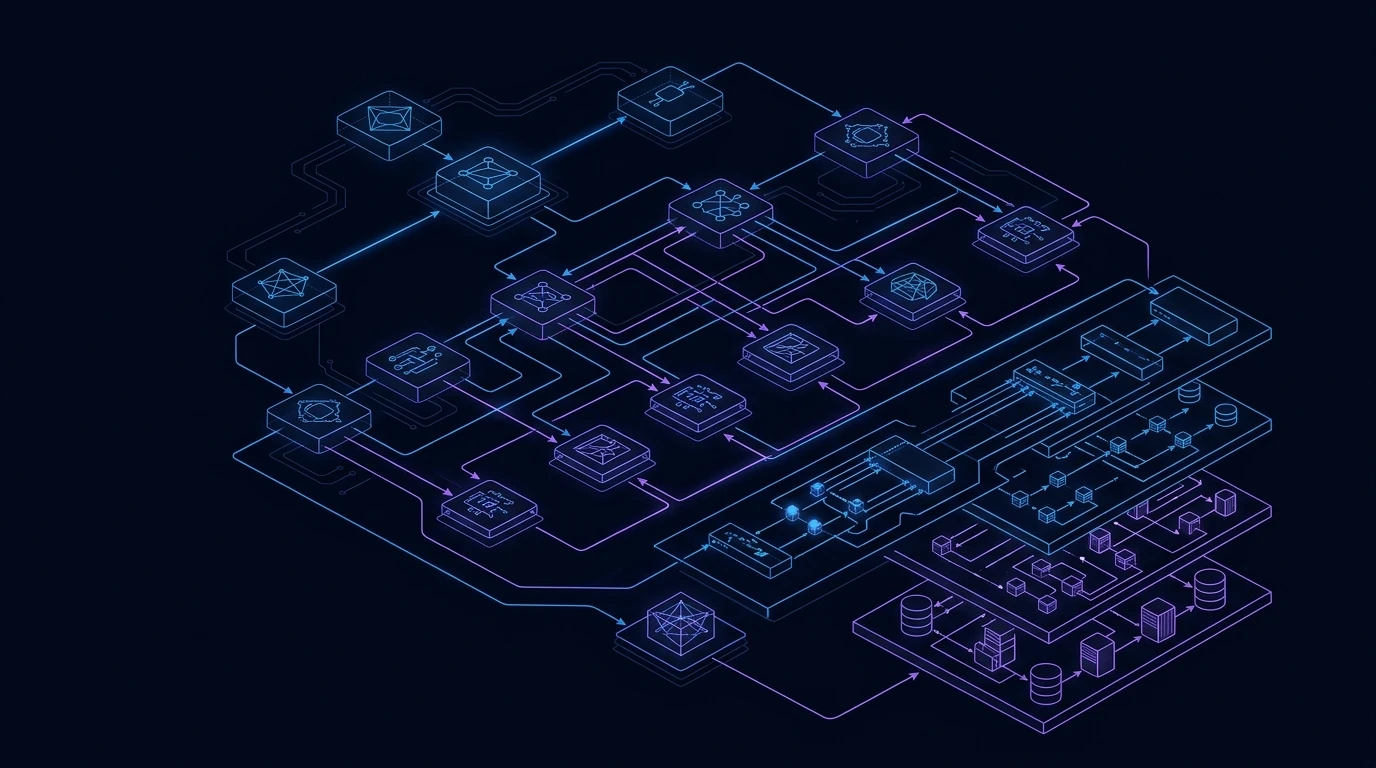
On October 8, 2026, at the global Gemini at Work summit, Google Cloud announced the general preview of the Gemini agent—a unified, universal enterprise agent operating as a first-class cognitive coworker across enterprise SaaS environments. Departing from conventional conversational assistants that rely on reactive turn-by-turn prompt chaining, the Gemini agent shifts enterprise automation into an objective-delegation paradigm. Rather than prompting a model for granular actions, enterprise users delegate high-level objectives (“Reconcile APAC Q3 operational expenditure anomalies, cross-reference vendor contracts in Drive, and draft an audit briefing in Docs”). Under the hood, Google Cloud’s orchestration harness decomposes the prompt into directed acyclic graph (DAG) task trees, spawns specialized sub-agents, routes steps across heterogeneous foundation models via Google Cloud Vertex AI, and maintains state across a newly architected four-tier persistent memory system.
Key Takeaways
- Objective-Driven Task Decomposition: Replaces step-by-step instructional prompt engineering with autonomous, multi-hour workflow execution, recursively generating, executing, and self-correcting sub-agent task trees.
- Heterogeneous Model Routing via Vertex AI: Operates as a model-agnostic control plane, using dynamic latency and cost optimizers to assign sub-tasks between native Gemini foundation tiers (Gemini 3.8 Flash, Gemini 4 Argon) and third-party models including Anthropic Claude 3.7.
- Four-Tier Persistent Memory Subsystem: Integrates session, semantic, procedural, and episodic memory into a unified retrieval architecture, solving cross-session context drift while strictly isolating enterprise data perimeters.
- First-Class Directory Identity & Governance: Provisions agents with cryptographic IDs, corporate directory profiles, dedicated email addresses, and calendar scheduling primitives protected by Vertex AI Agent Gateway and VPC Service Controls.
Paradigm Shift: Copilots vs. Autonomous Workplace Agents
For the past three years, enterprise generative AI has been dominated by inline “copilots”—stateless, single-turn conversational sidebars embedded within individual applications. While effective for localized text rewriting or formula generation, copilots fail at end-to-end knowledge workflows due to lack of longitudinal context, inability to coordinate cross-application state, and absence of independent execution runtime.
CONVENTIONAL INLINE COPILOT (Stateless, Human-In-The-Loop Serialized Handoffs):
[ User Prompt ] ──► [ Local App Context ] ──► [ Model Inference ] ──► [ Inline Output ]
       │                                                                      ▲
       └────── Human manually copies data to next application in workflow ────┘

GEMINI UNIVERSAL AGENT TOPOLOGY (Autonomous Objective Delegation & Distributed Execution):
[ Objective Prompt ]
        │
        ▼
[ Planner Core ] ◄──► [ Four-Tier Persistent Memory Engine ]
        │               (Session | Semantic | Procedural | Episodic)
        ├───► [ Sub-Agent: Data Extraction (BigQuery / Drive) ]
        ├───► [ Sub-Agent: Contract Compliance (Claude 3.7 Sonnet) ]
        └───► [ Sub-Agent: Financial Reconciliation (Gemini 4 Argon) ]
        │
        ▼
[ Agent Gateway ] ──► [ Enterprise Systems: Google Workspace | Microsoft 365 | Slack ]
The Gemini agent reclassifies the agent from a user interface accessory to an autonomous service principal. By operating from a single prompt interface that binds natively to Google Workspace (Gmail, Drive, Docs, Sheets, Slides, Chat, Calendar) as well as Microsoft 365, Slack, and Salesforce, the runtime eliminates human copy-paste friction across business applications.
| Architectural Dimension | Application-Bound Copilots (2024–2025) | Universal Gemini Agent (October 2026) |
|---|---|---|
| Execution Horizon | Single prompt-response turn (seconds) | Asynchronous long-horizon workflows (hours to days) |
| Context Scope | Active document buffer (< 128k tokens) | Four-tier persistent enterprise memory graph |
| Model Topology | Monolithic single-model binding | Heterogeneous smart routing (Gemini 4, 3.8 Flash, Claude) |
| Identity Model | User impersonation / session cookie | Cryptographic Agent Identity with RBAC & directory entry |
| Interoperability | Proprietary proprietary UI webviews | Production Agent2Agent (A2A) protocol & MCP endpoints |
| Governance Surface | Client-side prompt safety filters | Vertex AI Agent Gateway with real-time spend caps & CMEK |
As explored in our analysis of agent behavioral contracts and runtime enforcement, enterprise adoption of autonomous workflows requires verifiable operational bounds rather than probabilistic trust.
Architectural Deep-Dive: Four-Tier Cognitive Memory Engine
The core technical breakthrough enabling long-horizon execution in the Gemini agent is its tiered memory substrate. Enterprise workflows break down when agents suffer from catastrophic forgetting or cross-session hallucination. Google DeepMind and Google Cloud resolved this by stratifying memory into four discrete layers:
- Session Memory (Working Scratchpad): Ephemeral KV-cache and execution state allocated for the active objective. Operates within the 2M+ token context window, persisting tool invocation return payloads and intermediate validation outputs until objective resolution.
- Semantic Memory (Enterprise Knowledge Fabric): Vectorized embeddings and structured graph nodes indexing organizational documents, emails, Slack threads, and corporate intranets. Grounded using continuous retrieval-augmented generation (RAG) over BigQuery and Drive storage layers.
- Procedural Memory (Workflow Policy & Playbooks): Encodes how work is accomplished within a specific enterprise. Stores institutional standard operating procedures (SOPs), corporate templates, compliance requirements, and tool sequencing logic.
- Episodic Memory (Historical Trajectories & Feedback): A chronological ledger tracking past completed tasks, user corrections, feedback loops, and audit checkpoints. When an agent repeats a monthly billing reconciliation, episodic memory loads lessons learned from prior billing cycles.
// Architectural representation: Initializing an enterprise task via Google GenAI Agent SDK
import { GoogleGenAI, AgentTaskDefinition } from "@google/genai";

const ai = new GoogleGenAI({
  project: process.env.GCP_PROJECT_ID,
  location: "global",
});

const corporateAuditTask: AgentTaskDefinition = {
  objective: "Conduct cross-platform APAC Q3 spend audit against vendor MSA terms.",
  contextBoundary: {
    dataPerimeter: "projects/enterprise-fin-prod/locations/apac",
    accessControlRole: "roles/finance.auditor.agent",
    allowedDomains: ["workspace.google.com", "graph.microsoft.com"],
  },
  memoryPolicy: {
    retainEpisodicHistory: true,
    proceduralPlaybookId: "sop-apac-sox-compliance-v4",
    semanticGroundingSources: [
      "bigquery://enterprise-data-mesh:apac_procurement.ledger_2026",
      "drive://corporatedrive/legal/vendor_contracts_apac",
    ],
  },
  routerStrategy: {
    latencyTier: "STANDARD_EFFICIENCY",
    costCeilingUSD: 18.50,
    allowThirdPartyModels: true, // Enables Claude 3.7 routing on Vertex Model Garden
  },
};

const agentRuntime = await ai.agents.spawnDelegatedSession(corporateAuditTask);
const taskHandle = await agentRuntime.dispatchAsync();
console.log(`[Telemetrics] Agent task active: ${taskHandle.taskId} | Status: RUNNING`);
Sub-Agent Orchestration & Heterogeneous Smart Routing
Complex enterprise objectives rarely benefit from processing through a single monolithic model. A task requiring simultaneous SQL data aggregation, legal contract interpretation, and executive slide synthesis exhibits conflicting compute requirements.
The Gemini agent implements a dynamic Smart Routing Engine across the Google Gemini Enterprise ecosystem:
- Planning & Decomposition (Gemini 4 Argon): Analyzes the root objective and synthesizes a hierarchical DAG. As detailed in our breakdown of Gemini 4 Argon’s long-horizon reasoning, formal verification loops validate task boundaries prior to execution.
- High-Throughput Retrieval & Ingestion (Gemini 3.8 Flash): Rapidly parses gigabytes of unstructured documents, receipts, and communication logs, extracting structured JSON schemas with ultra-low latency.
- Complex Cross-Model Reasoning (Anthropic Claude 3.7 / Model Garden): For tasks requiring alternative architectural perspectives or specialized code verification, the runtime leverages Vertex AI’s managed Model Garden to dispatch sub-tasks directly to Claude models without leaving Google Cloud’s security envelope.
- Real-Time Voice & Video Narration (Gemini 3.8 Live): When enterprise operators request vocal telemetry updates during execution, the system routes continuous audio over Gemini 3.8 Live bidirectional channels.
| Sub-Agent Worker Tier | Primary Model Engine | Primary Responsibility | Typical Latency SLA |
|---|---|---|---|
| Master Orchestrator | Gemini 4 Argon | Task graph synthesis, constraint verification | 1,800ms (planning phase) |
| Data Ingestion Worker | Gemini 3.8 Flash | Workspace document parsing, tabular extraction | < 250ms per chunk |
| Contract / Legal Analyst | Claude 3.7 Sonnet (Vertex) | Asymmetric clause comparison, risk scoring | 850ms – 1,400ms |
| Synthesis & Formatting | Gemini 3.8 Pro | Document generation, Slides assembly, Sheets formula creation | 600ms – 1,100ms |
Enterprise Governance, Agent Gateway, and A2A Protocol
Deploying an autonomous agent into core enterprise communications surfaces unprecedented security challenges: prompt injection, unauthorized privilege escalation, and runaway cloud API costs. Google Cloud’s architecture introduces three non-negotiable defensive layers:
- Cryptographic Agent Identity: The agent does not inherit the raw credentials of the requesting user. Instead, the runtime mints an ephemeral, short-lived OAuth token bounded by granular IAM roles. The agent is indexed in Google Workspace Directory with its own email address (
agent-audit@enterprise.com), establishing an explicit audit trail in Google Cloud CloudTrail/Cloud Audit Logs. - Vertex AI Agent Gateway: Acts as an enterprise proxy inspecting all outbound tool calls and inbound data streams. The gateway enforces:
- Real-Time Spend Caps: Prevents recursive execution loops from incurring unexpected API billing charges.
- Sandboxed Code Execution: Executes Python/SQL interpreter steps in ephemeral, gVisor-isolated containers with egress restrictions.
- Data Loss Prevention (DLP): Redacts customer PII, HIPAA-sensitive health records, and secret API tokens before sending context to model endpoints.
- Production Agent2Agent (A2A) Protocol: When cooperating with external AI systems (such as a supplier’s internal supply chain agent), the Gemini agent communicates via the standardized, encrypted A2A protocol, verifying signed cryptographic signatures before sharing operational telemetry.
For engineering teams looking at interoperable tooling architectures, our technical guide on Cloudflare MCP server integration covers how standard protocol surfaces protect enterprise boundaries against malicious payloads.
Strategic Roadmap for Enterprise Architects & CAIOs
The introduction of the universal Gemini agent at Gemini at Work 2026 demonstrates that the enterprise AI paradigm has matured from chat interfaces to background labor automation.
To capitalize on this architectural evolution, enterprise technology leaders should prioritize the following initiatives:
- Audit Data Access Control Boundaries: Because the Gemini agent indexes organizational data via semantic memory, misconfigured Drive permissions or open SharePoint directories present immediate security exposure. Implement least-privilege RBAC policies before activating universal agent indexing.
- Transition from System Prompts to Procedural Playbooks: Refactor proprietary operational workflows into structured procedural schemas (
playbook.json) specifying exact validation criteria, required tool inputs, and exception-handling paths. - Establish Budgetary Ceilings in Agent Gateway: Configure strict organizational quotas on autonomous token consumption and execution runtime durations, ensuring multi-day task trees fail gracefully rather than compounding compute charges.
The Gemini agent proves that the future of enterprise software is not another application interface, but a coordinated fabric of autonomous, governed intelligence executing within the background of modern work.
Related Google Gemini Lab Dossiers
// GEM-DOSSIER
Gemini 3.8 Live: Architecture of Asynchronous Voice Agents
Architectural breakdown of Gemini 3.8 Live & Extended Thinking: bidirectional audio streaming, background tool execution, and Vertex AI latency SLAs.