Veeda AI's $90M Seed: Toronto's Spatial World Model Leap

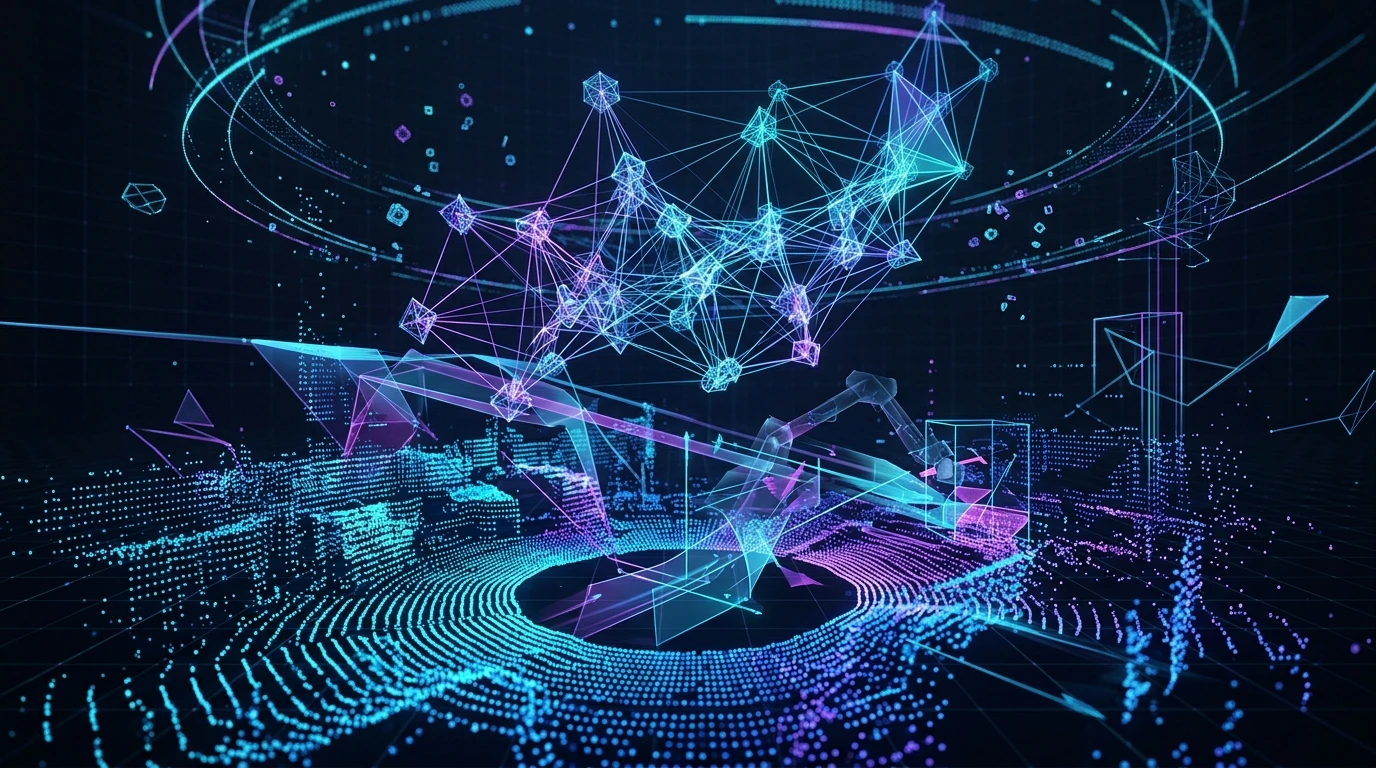
The biggest bottleneck in robotics today isn’t hardware engineering—it is the fundamental inability of language-centric AI models to understand, simulate, and predict the 3D physical world.
While enterprise generative AI has mastered text and code, physical systems like autonomous vehicles, humanoid robots, and industrial automation demand real-time spatial reasoning and physics simulation. On August 19, 2026, Toronto-based Veeda AI stepped into the spotlight to solve this exact bottleneck, closing an unprecedented US$90 million (approx. $123M CAD) seed round—one of the largest initial funding rounds in Canadian technology history.
Key Takeaways
- Unprecedented Seed Round: Veeda AI closed over US$90M in seed capital co-led by Toronto’s Radical Ventures and Silicon Valley giant Khosla Ventures.
- Elite Leadership: Co-founded by Sanja Fidler, former VP of AI Research and Head of NVIDIA’s Spatial Intelligence Lab in Toronto and U of T professor, alongside long-time colleagues Zan Gojcic (CTO) and Huan Ling (Chief Scientist).
- 3D Spatial World Models: Rather than training text transformers, Veeda AI builds “simulated reality” world models that process depth, geometry, and physical mechanics.
- Sovereign Physical AI Ecosystem: The funding cements Toronto as a premier global hub for embodied AI, bridging top-tier academic talent with domestic industrial scale.
From Large Language Models to Large World Models
For years, foundation model development was dominated by scaling laws applied to natural language. However, scaling text tokens does not teach a robotic manipulator how object mass behaves under friction or how an autonomous vehicle should navigate dynamic, unstructured environments.
Veeda AI is pioneering the transition toward Large World Models (LWMs). Instead of generating the next plausible word in a sentence, world models simulate physical reality. They project multi-modal inputs—such as spatial point clouds, LiDAR, depth cameras, and force sensors—into persistent 3D spatial representations.
This paradigm shift directly addresses the physical execution gap highlighted in recent enterprise frameworks like applied-intuition-dana-physical-ai, where software intelligence must interact safely and predictably with real-world machines.
The Toronto Core: Commercializing World-Class Academic Talent
Canada has long been recognized for foundational AI research, yet retaining executive-level talent and capturing downstream commercial value domestically has historically posed a challenge. Veeda AI represents a landmark reversal of that trend.
Sanja Fidler, a renowned University of Toronto computer science professor, previously built and led NVIDIA’s influential Spatial Intelligence Lab in Toronto. By assembling a founding team of veteran researchers—including Zan Gojcic and Huan Ling—Veeda AI retains elite talent right at the intersection of Canadian academia and global industry.
As reported by BetaKit and The Logic, both Radical Ventures and Khosla Ventures have taken board seats, signaling massive institutional confidence in Toronto’s technical moat.
This domestic talent retention aligns directly with broader national initiatives, such as cifar-24m-canada-ai-chairs-expansion and provincial investments like alberta-50m-amii-sovereign-ai, which aim to turn world-class research into high-growth enterprise infrastructure.
Why Physical AI is the Next Enterprise Frontier
For enterprises across manufacturing, logistics, and robotics, high-fidelity physical simulation is the holy grail. Training robots in physical environments is prohibitively slow, expensive, and dangerous. Veeda AI’s world models enable zero-shot sim-to-real transfer—allowing autonomous systems to train across billions of simulated edge cases in high-speed 3D environments before ever executing in the physical world.
As analyzed in spatial-intelligence, understanding 3D geometry and spatial depth is the key to unlocking autonomous systems that adapt to novel surroundings without continuous human intervention.
+-------------------------------------------------------------------+
|                     VEEDA AI WORLD MODEL STACK                     |
+-------------------------------------------------------------------+
| [ Spatial Inputs ] LiDAR • Point Clouds • Stereo Vision • Depth   |
+-------------------------------------------------------------------+
                                  │
                                  ▼
+-------------------------------------------------------------------+
| [ 3D World Engine ] Spatial Representation • Physics Simulation   |
+-------------------------------------------------------------------+
                                  │
                                  ▼
+-------------------------------------------------------------------+
| [ Physical Action ] Embodied Robotics • Autonomous Systems        |
+-------------------------------------------------------------------+
Detailed technical breakdowns on embodied intelligence published by Unite.AI emphasize that physics-grounded world models will redefine how industrial automation and humanoid platforms operate safely alongside human workforces.
Final Thoughts & Strategic Outlook
Veeda AI’s US$90 million financing marks a definitive shift in the global AI landscape: the focus is expanding from digital productivity assistants to physical world comprehension.
For Canadian enterprise leaders and technology strategists, this capital injection proves that sovereign AI isn’t just about localized data centers or text models—it requires controlling the core simulation layers that will power tomorrow’s physical automation. As Veeda AI accelerates its roadmap, Toronto is firmly established as the global nerve center for 3D spatial intelligence.