Telus Exits Westbank 150 MW Vancouver Sovereign AI Build

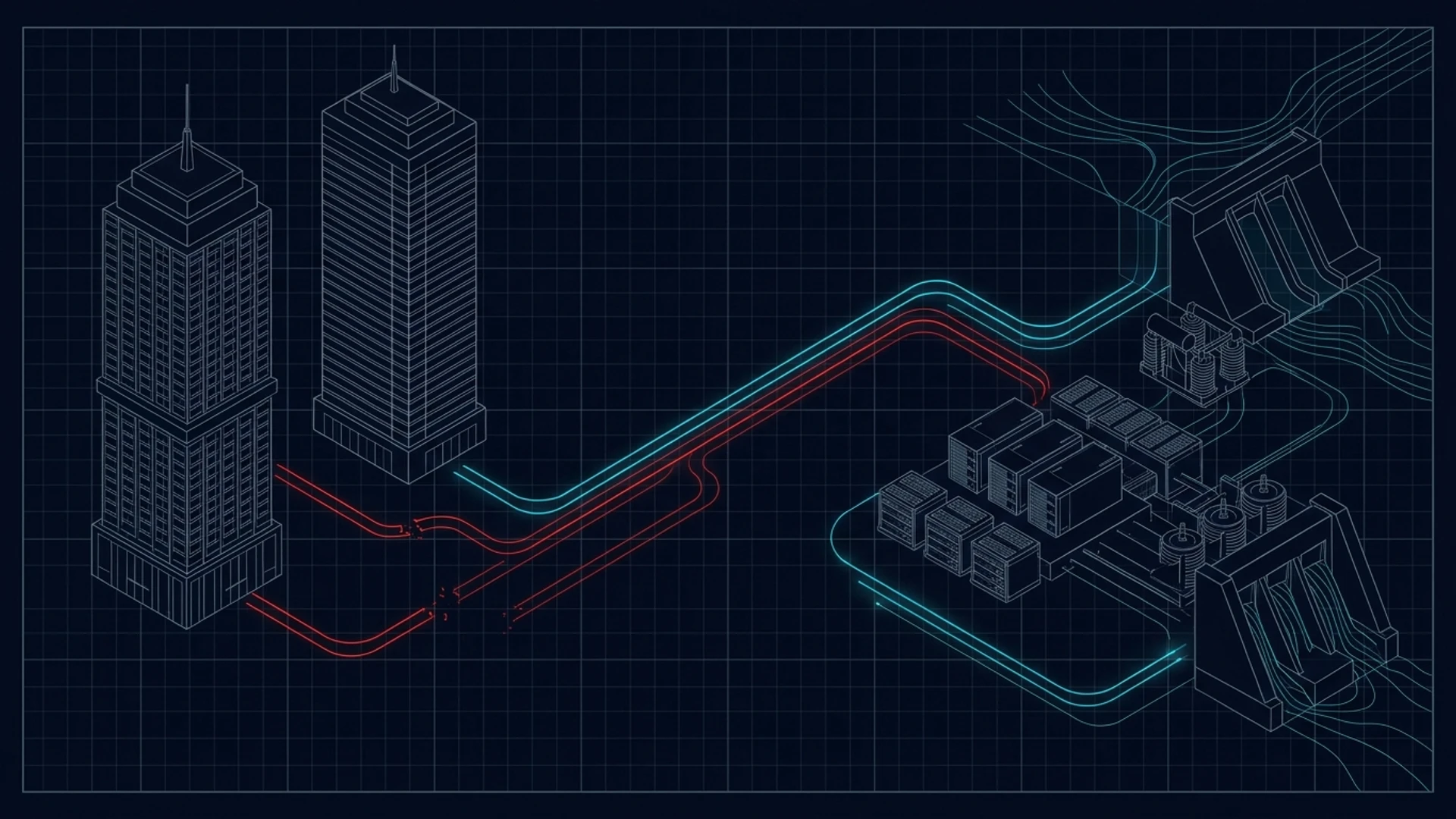
In mid-November 2026, TELUS Corporation formally terminated its co-development partnership with real estate developer Westbank Corp. on two high-profile, government-backed urban AI data centres in Vancouver—a 10-storey facility at 150 West Georgia Street and the conversion of the M3 office building at 111 East 5th Avenue in Mount Pleasant—according to reporting by BetaKit. Originally announced in May 2026 under Ottawa’s Enabling Large-Scale Sovereign AI Data Centres memorandum of understanding (MOU) framework, the multi-site British Columbia cluster was engineered to draw up to 150 megawatts (MW) of power alongside a $90 million CAD BC Hydro electrical substation upgrade in Mount Pleasant. Following municipal rezoning delays, community opposition, and executive leadership changes at TELUS, the telecom operator is pivoting its British Columbia sovereign compute expansion to its existing Kamloops campus, targeting 20 MW of capacity by 2028.
Key Takeaways
- 150 MW Urban Cluster Realignment: TELUS withdrew from the Westbank co-development sites at 150 West Georgia St. and 111 East 5th Ave. after municipal permitting friction and public scrutiny stalled urban site timelines.
- Kamloops Sovereign Compute Pivot: TELUS affirmed its alignment with federal sovereign AI goals by redirecting B.C. expansion capital toward scaling its existing Kamloops data centre facility to 20 MW by 2028, complementing its operational Sovereign AI Factory in Rimouski, Quebec.
- Substation & CapEx Friction Exposed: BC Hydro’s planned $90 million CAD Mount Pleasant substation upgrade underscored the grid-interconnection and permitting fragility facing high-density urban AI builds versus regional industrial hubs.
- Westbank Replacement Continuity: Westbank confirmed the Vancouver facilities are not cancelled and stated it has secured an undisclosed replacement partner to advance the urban projects independently of TELUS.
Anatomy of the Urban Sovereign AI Bottleneck
When Ottawa and TELUS advanced their sovereign AI MOU under the federal government’s broader $1 billion-scale domestic compute push, the Vancouver partnership pitched dense urban colocation paired with residential and commercial waste-heat recovery. In practice, placing 40–100 kW liquid-cooled GPU racks inside dense metropolitan zoning envelopes collided with three structural constraints:
- Municipal Rezoning Latency: Urban land-use hearings and community opposition in Mount Pleasant and downtown Vancouver introduced multi-quarter schedule uncertainty incompatible with fast-depreciating GPU deployment cycles.
- Grid Substation Lead Times: Supporting high-density loads in Mount Pleasant depended on BC Hydro’s $90 million substation expansion, creating a single point of infrastructure dependency before racks could be energized.
- Capital Allocation Discipline: Under incoming leadership, TELUS prioritized brownfield expansion at Kamloops and proven sovereign capacity in Rimouski—where its initial Sovereign AI Factory sold out rapidly—over capital-intensive greenfield real estate risk.
+---------------------------------------------------------------------------------------------------+
|                   B.C. SOVEREIGN AI COMPUTE TOPOLOGY: PRE-EXIT VS. POST-EXIT                      |
+---------------------------------------------------------------------------------------------------+
| [Stalled Urban Path]  Westbank Co-Development (Vancouver Core)                                    |
|                       * 150 West Georgia St. (10-storey proposed)                                 |
|                       * 111 East 5th Ave. (Mount Pleasant M3 conversion)                          |
|                       * Dependency: BC Hydro $90M substation upgrade + municipal rezoning         |
|                       * Status (Nov 2026): TELUS exits; Westbank seeks new partner                |
|                                                                                                   |
| [Active B.C. Pivot]   +-------------------------------------------------------------------------+ |
|                       |              TELUS KAMLOOPS DATA CENTRE EXPANSION (KIDC)                | |
|                       |   * Target Capacity: 20 MW Sovereign Compute by 2028                    | |
|                       |   * Grid Profile: Existing brownfield interconnect on BC Hydro clean hydro| |
|                       |   * Federal Alignment: Ottawa Sovereign AI Factory MOU & ISED strategy  | |
|                       +-------------------------------------------------------------------------+ |
|                                                    |                                              |
|                                                    v                                              |
| [National Fabric]     +-------------------------------------------------------------------------+ |
|                       |      RIMOUSKI (QC) + KAMLOOPS (BC) + FEDERAL 500 MW BACKSTOP POOL       | |
|                       |   * Connects East/West sovereign inference for banks, health & telcos   | |
|                       +-------------------------------------------------------------------------+ |
+---------------------------------------------------------------------------------------------------+
Site & Infrastructure Comparison: Vancouver vs. Kamloops vs. Rimouski
Enterprise infrastructure architects evaluating Canadian compute residency must distinguish between announced real estate MOUs and energized megawatts. As documented by local B.C. reporting and federal strategy disclosures, the regional shift changes short-term capacity timelines across Western Canada:
| Infrastructure Node | Planned / Active Capacity | Grid & Real Estate Profile | Federal Alignment & Status (Nov 2026) |
|---|---|---|---|
| Vancouver Urban Cluster (150 W. Georgia & 111 E. 5th) | Up to 150 MW (combined multi-site target) | Urban rezoning required; tied to $90M BC Hydro Mount Pleasant substation upgrade | TELUS exited partnership with Westbank; Westbank proceeding with replacement partner |
| Kamloops Facility (KIDC, B.C.) | Scaling to 20 MW by 2028 | Brownfield data centre footprint; established BC Hydro renewable power interconnect | Active TELUS B.C. priority for sovereign enterprise AI workloads |
| Rimouski Sovereign AI Factory (QC) | High-density NVIDIA GPU cluster (Phase 1 online Sept 2025) | Existing regional Hydro-Québec clean power corridor; zero urban zoning friction | Operational & fully subscribed; primary anchor of TELUS sovereign GPU cloud |
| Federal Budget 2026 Backstop Pool | 500 MW national sovereign reserve (>800 MW target by 2030) | Coordinated via ISED loan backstops and multi-year public offtake agreements | Enforces domestic compute access across Canada’s 500 MW compute framework |
Strategic Implications for Canadian Enterprise AI & Federal Policy
TELUS’s withdrawal exposes a critical tension inside Canada’s sovereign AI buildout. In Budget 2026’s 500 MW compute backstop analysis, federal planners structured sovereign loan backstops and offtake guarantees to unlock private capital for domestic data centres. Similarly, Ottawa’s $1.6 billion equity stake in Cohere legally mandates $1.7 billion CAD in domestic compute spend by 2030.
However, balance-sheet guarantees from Ottawa cannot override municipal land-use bottlenecks or urban electrical substation timelines. Two architectural realities follow for Canadian enterprises, public-sector buyers, and research consortia across the Vector Institute, Mila, and Amii:
- Brownfield Industrial Corridors Beat Urban Showpieces: Sovereign compute timelines favour existing regional substations—such as Kamloops, Rimouski, and Quebec or Alberta industrial corridors—where 20–100 MW interconnections do not depend on metropolitan rezoning votes.
- 2027–2028 Capacity Tightness in Western Canada: With the 150 MW Vancouver urban build delayed by partner handoff and municipal reviews, immediate sub-10ms Western Canadian GPU capacity remains constrained until Kamloops reaches its 20 MW target in 2028 or Alberta clusters scale.
- Multi-Region Inference Failover Is Mandatory: Regulated organizations deploying Cohere enterprise workloads under OSFI Guideline E-21 cannot rely on a single metropolitan availability zone. Workloads must span Quebec (Rimouski/Montreal) and Western Canadian nodes with deterministic data-residency routing.
Enterprise Implementation & Next Steps
Chief AI Officers (CAIOs) and Cloud Infrastructure Architects procuring sovereign Canadian GPU capacity for 2027–2028 production deployments should execute three concrete verification steps:
- Audit Vendor Energized MW vs. MOU Pipelines: When evaluating Canadian sovereign cloud RFPs, require contractual proof of energized substation capacity and municipal zoning clearance rather than non-binding MOU announcements. Separate active clusters (e.g., Rimouski, existing Kamloops footprints) from pre-permitting urban proposals.
- Design East-West Canadian Active-Passive Topologies: Deploy confidential RAG and agentic inference stacks across Quebec and B.C./Alberta endpoints using hardware-isolated runtimes. Ensure your private AI implementation architecture enforces strict Canadian territorial routing during regional failover.
- Lock Multi-Year Compute Reservations Early: Because TELUS’s initial Rimouski capacity sold out rapidly and Vancouver’s 150 MW timeline has shifted, enterprise teams training or fine-tuning domain models should secure multi-year capacity reservations ahead of the 2027 ISED Compute Challenge allocations.