2026 Prediction: The Death of the CAIO and the Rise of AgentOps

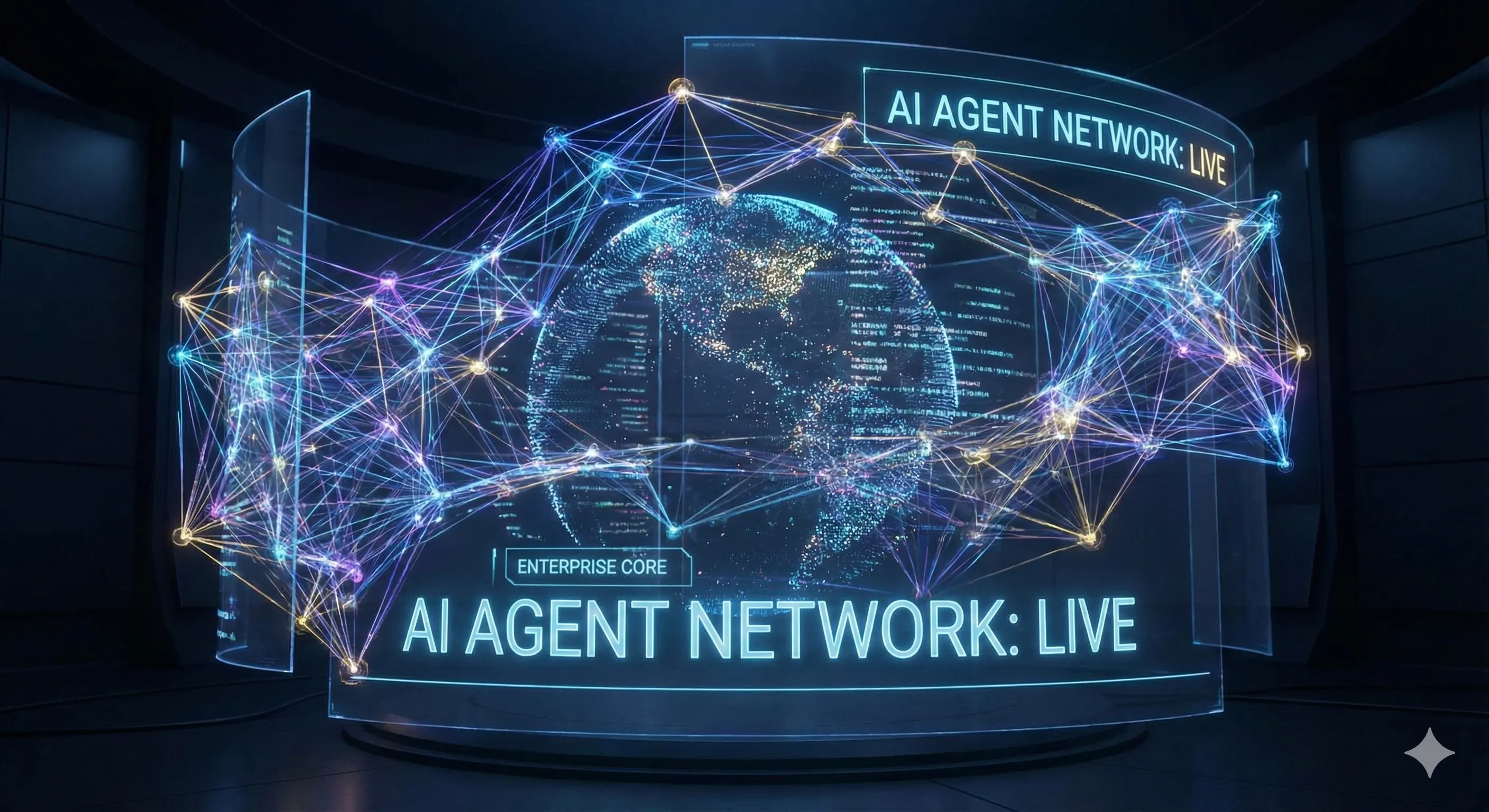
In 2024 and 2025, the boardroom trend was undeniable: every major enterprise rushed to hire a Chief AI Officer (CAIO). It was the frantic response to the Generative AI boom—a strategic bridge role designed to figure out “what this AI thing means for us.”
Prediction for 2026: The CAIO role as we know it will begin to disappear.
Not because AI failed, but because it succeeded too well. As we move into 2026, the challenge is no longer strategy; it is operations. The era of the “Digital Employee” is upon us, and it requires a completely new discipline: AgentOps.
Key Takeaways
- Strategy to Execution: The “AI Strategy” phase is over. 2026 is about managing a live, autonomous digital workforce.
- The New DevOps: AgentOps (Agent Operations) will emerge as a critical IT discipline, distinct from MLOps.
- Governance is Real-Time: Policies on paper are dead. You need real-time monitoring to prevent agent hallucination and budget runaway.
The Shift: From Chatbots to Digital Workforces
We are witnessing the rapid maturation of Agentic AI, where AI systems evolve from passive chat interfaces to proactive agents that can reason, plan, and execute tasks across your software ecosystem.
Gartner predicts that by 2026, 40% of enterprise applications will feature task-specific AI agents. This isn’t just a feature update; it’s a fundamental change in the workforce. You aren’t just managing software anymore; you are managing a fleet of autonomous workers.
A CAIO focusing on high-level “digital transformation” is ill-equipped for this reality. We don’t need more vision decks; we need to know why the Procurement Agent just spent $50,000 on cloud credits without approval.
Enter AgentOps: The DevOps of the AI Era
Just as DevOps bridged the gap between development and IT operations, AgentOps is emerging to bridge the gap between AI models and reliable business value.
In 2026, AgentOps will be the department responsible for:
- Orchestration: Managing how multiple agents hand off tasks to one another (e.g., a Sales Agent triggering a Legal Review Agent).
- Performance Monitoring: Not just uptime, but decision quality. Did the Customer Support Agent solve the ticket correctly, or did it hallucinate a policy?
- Cost Control: Token usage is the new electricity bill. Unsupervised recursive agents can burn through budgets in minutes.
This is a technical, operational discipline. It belongs to engineering leaders and product managers, not a standalone strategy officer.
The Governance Gap
We previously argued that AI Governance is a competitive advantage, not just a compliance checkbox. In 2026, this becomes literally true.
The “Digital Employee” doesn’t take coffee breaks, but it can make mistakes at 1,000x the speed of a human. The enterprises that win in 2026 will be those that implement real-time guardrails.
- Identity Management for Agents: Which agent is allowed to access the production database?
- Audit Trails: When an agent makes a pricing decision, can you trace the “thought process” (chain of thought) back to the source?
This is where the Chief AI Officer role falters. The responsibilities will fragment: the CEO owns the vision (because AI is now the business), the CIO owns the infrastructure, and the Head of AgentOps owns the daily reliability of the digital workforce.
Implications for Your Business
If you are still looking for a CAIO to “save” you, you are fighting the last war. Instead, start building your AgentOps capacity.
- Audit Your Workflows: Identify where autonomous agents can replace “human-in-the-loop” with “human-on-the-loop” (monitoring/approval).
- Invest in Observability: You cannot manage what you cannot see. Ensure your AI stack includes deep logging and tracing capabilities.
- Prepare for the Hybrid Workforce: Your org chart in 2026 will list humans and agents side-by-side.
Final Thoughts
The disappearance of the CAIO isn’t a demotion of AI; it’s a graduation. AI acts as the new operating system of the enterprise. In 2026, we stop talking about “using AI” and start focusing on “employing agents.”
The future belongs to the operators. Are you ready to manage your digital workforce?